Easter travel chaos fears with snow, temperatures of minus 10C and rail strikes set to wreak havoc across Britain as the 'Beast...
The finds were made in the district of Huanchaco, around 11 miles (13 km) from the coastal city of Trujillo At least 12 children are believed to have been ritually sacrificed by the Chimu civilisation at this locationThe Chimu were a pre-Incan culture that emerged out of the remnants of the Moche people in around 900ADAround 130 pottery vessels have also been uncovered, some of which date to before the Chimu sacrifice
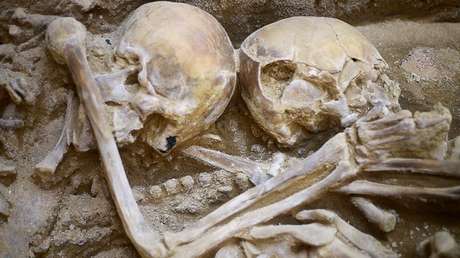
Buried beneath the streets of Peru, archaeologists have discovered the bodies of at least 12 children believed to have been sacrificed by the ancient Chimu civilisation.
A group of 47 tombs has been found, along with a hoard of more than 100 buried artefacts, thought to date back to around 1,200 to 1,400 AD.
Researchers have uncovered evidence that suggest the people behind their sacrifice may have tried to remove their hearts to appease the weather gods, it has been reported.
Stunning images have also revealed several of the ceramics objects adorned with maritime themes, coastal animals, and geometric shapes, reflecting the connection to the sea felt by the ancient culture.
 Buried beneath the streets of Peru, archaeologists have discovered the bodies of at least 12 children believed to have been sacrificed by the Chimu civilisation. A group of 47 tombs has been found in the Trujillo region, along with a hoard of more than 100 buried artefacts, thought to date back to around 1,200 to 1,400 AD
 Stunning images reveal that several of the objects are ceramics with maritime themes, coastal animals, and geometric shapes, reflecting the connection to the sea felt by the ancient culture
The finds were made in the district of Huanchaco, around 11 miles (13 km) from the city of Trujillo, by archaeologists working on behalf of the local government ahead of the construction of new water and drainage networks.
Víctor Campaña León, director at the archaeological site, said the children were found with cuts to their chest, which may have been an attempt to break the ribs of the children - possibly to remove their hearts, according to reports in Newsweek.
One of the children was buried with 39 shells belonging to spondylus, a mollusc known as the spiny oyster, the most found in a Peruvian burial to date.
 The Chimu were a pre-Incan culture that emerged out of the remnants of the Moche culture along the coast of Peru in 900AD. They are famed for their black ceramics, which were mass produced, as well as intricately worked precious metals. Chimu pottery is often adorned with maritime imagery
 The Chimu people lived in a strip of desert less than 100 miles wide between the Pacific and the Andes. They are thought to have survived by fishing and worshipped the moon, believing it to be more powerful than the sun
WHO WERE THE CHIMU PEOPLE OF ANCIENT PERU?
The Chimu were a pre-Incan culture that emerged out of the remnants of the Moche culture along the coast of Peru in 900AD.
They are famed for their black ceramics and intricately worked precious metals.
The Chimu people lived in a strip of desert, 20 to 100 miles (30 to 160 km) wide, between the Pacific and the Andes.
They are thought to have survived by fishing and worshipped the moon, believing it to be more powerful than the sun.
Archaeologists believe they practised ritual sacrifice.
Around 1470 AD, the Inca ruler Tupac Inca Yupanqui conquered the Chimu.
His rule was short lived, however, as the Spanish conquered the region in 1534 AD.
In a written statement, he said: 'What they wanted to do with the presence of the children in this arid area is to attract rain, to improve cultivation.'
Around 130 pottery vessels have also been uncovered, some of which are believed to date to before the Chimu sacrifice.
Fishing tools such as weights, hooks and needles have also been found.
Many of these artefacts probably belonged to residents of Chan Chan, the capital of the Chimu kingdom, who came to the site to leave offerings to their deities.
The Chimu were a pre-Incan culture that emerged out of the remnants of the Moche culture along the coast of Peru in 900AD.
 Around 1470 AD, the Inca ruler Tupac Inca Yupanqui conquered the Chimu. His rule was short lived, however, as the Spanish conquered the region in 1534 AD. Many of the symbolic representations on Chimu pottery revolves around its people's relationship with the sea
 Around 130 pottery vessels have also been uncovered, some of which are believed to date to before the Chimu sacrifice. Fishing tools such as weights, hooks and needles have also been found
They are famed for their black ceramics and intricately worked precious metals.
The Chimu people lived in a strip of desert, 20 to 100 miles (30 to 160 km) wide, between the Pacific and the Andes.
They are thought to have survived by fishing and worshipped the moon, believing it to be more powerful than the sun.
Around 1470 AD, the Inca ruler Tupac Inca Yupanqui conquered the Chimu. His rule was short lived, however, as the Spanish conquered the region in 1534 AD.
The precise details of the sacrifices are unknown, but similar rituals appear to have been adopted by the Incan civilisation when it rose to prominence in the region.
 Archaeologists unearth tombs and human remains from the Chimu culture in Trujillo, Peru. The artefacts uncovered probably belonged to residents of Chan Chan, the capital of the Chimu kingdom, who came to the site to leave offerings to their deities
 The precise details of the sacrifices are unknown, but similar rituals appear to have been adopted by the Incan civilisation when it rose to prominence in the region
 The Chimu are best known for their distinctive monochromatic pottery and fine metal working of copper, gold, silver, bronze, and tumbaga - a mixture of copper and gold
Among the finds revealing this ritual behaviour is the mummified remains of a child's body, discovered in 1985 by a group of mountaineers.
The remains were uncovered at around 17,388ft (5,300 metres) on the southwestern ridge of Cerro Aconcagua mountain in the Argentinean province of Mendoza.
The boy is thought to have been a victim of an Inca ritual called capacocha, where children of great beauty and health were sacrificed by drugging them and taking them into the mountains to freeze to death.
Ruins of a sanctuary used by the Inca to sacrifice children to their gods was discovered by archaeologists in at a coastal ruin complex in Peru in 2016.
 Víctor Campaña León, director at the archaeological site, said the children were found with cuts to their chest area, which may have been an attempt to break the ribs of the children - possibly to remove their hearts
 Capacocha was a ritual that took place upon the death of an Inca king. The local lords were required to select unblemished children representing the ideal of human perfection. Children were married and presented with sets of miniature human and llama figurines in gold, silver, copper and shell
Experts digging at Chotuna-Chornancap, in north Lima, discovered 17 graves dating to at least the 15th century. This included the graves of six children placed side by side in pairs of shallow graves.
Capacocha was a ritual that took place upon the death of an Inca king. The local lords were required to select unblemished children representing the ideal of human perfection.
Children were married and presented with sets of miniature human and llama figurines in gold, silver, copper and shell.
The male figures have elongated earlobes and a braided headband and the female figurines wore their hair in plaits.
 Uncer Capacocha, children were returned to their original communities, where they were honoured before being sacrificed to the mountain gods on the Llullaillaco Volcano. The Chimu culture appears to have had similar rituals around child sacrifice
 One of the children uncovered was buried with 39 shells belonging to spondylus, a mollusc known as the spiny oyster, the most found in a Peruvian burial to date
The children were then returned to their original communities, where they were honoured before being sacrificed to the mountain gods on the Llullaillaco Volcano.
The phrase Capacocha has been translated to mean 'solemn sacrifice' or 'royal obligation.'
The rationale for this type of sacrificial rite has typically been understood as the Inca trying to ensure that humanity's best were sent to join their deities.
 The finds were made in the district of Huanchaco, around 11 miles (13 km) from the city of Trujillo, by archaeologists working on behalf of the local government, ahead of the construction of new water and drainage networks
WHY DID ANCIENT SOUTH AMERICAN CULTURES SACRIFICE THEIR CHILDREN?
Child sacrifice seems to have been a relatively common occurrence in the cultures of ancient Peru, including the pre-Incan Sican, or Lambayeque culture and the Chimu people who followed them, as well as the Inca themselves.
Among the finds revealing this ritual behaviour are the mummified remains of a child's body, discovered in 1985 by a group of mountaineers.
The remains were uncovered at around 17,388ft (5,300 metres) on the southwestern ridge of Cerro Aconcagua mountain in the Argentinean province of Mendoza.
 Child sacrifice seems to have been a relatively common occurrence in the cultures of ancient Peru. Among the finds revealing this ritual behaviour were the mummified remains of a child's body (pictured), discovered in 1985 by a group of mountaineers
The boy is thought to have been a victim of an Inca ritual called capacocha, where children of great beauty and health were sacrificed by drugging them and taking them into the mountains to freeze to death.
Ruins of a sanctuary used by the Inca to sacrifice children to their gods was discovered by archaeologists in at a coastal ruin complex in Peru in 2016.
Experts digging at Chotuna-Chornancap, in north Lima, discovered 17 graves dating to at least the 15th century. This included the graves of six children placed side by side in pairs of shallow graves.
Capacocha was a ritual that took place upon the death of an Inca king. The local lords were required to select unblemished children representing the ideal of human perfection.
 Ruins of a sanctuary used by the Inca to sacrifice children to their gods was discovered by archaeologists in at a coastal ruin complex in Peru in 2016. Experts digging at Chotuna-Chornancap (pictured), in north Lima, discovered 17 graves dating to at least the 15th century
Children were married and presented with sets of miniature human and llama figurines in gold, silver, copper and shell. The male figures have elongated earlobes and a braided headband and the female figurines wore their hair in plaits.
The children were then returned to their original communities, where they were honoured before being sacrificed to the mountain gods on the Llullaillaco Volcano.
The phrase Capacocha has been translated to mean 'solemn sacrifice' or 'royal obligation.'
The rationale for this type of sacrificial rite has typically been understood as the Inca trying to ensure that humanity's best were sent to join their deities.